

Charitable Giving in 2025:
How New Tax Rules May Affect Your Charitable Giving Strategy
As year-end approaches, many of us reflect on how we want to give back – whether that’s supporting causes we care about, leaving a legacy, or aligning our finances with our values.
If philanthropy is part of your approach, 2025 offers a unique and timely window to make your giving more strategic and impactful.
Below is a guide to help you understand how tax law changes, charitable vehicles, and different giving strategies may affect your approach, whether you give modestly, regularly, or at a larger scale.

What “Charitable Giving” Means & Why It Varies by Individual
Charitable giving is deeply personal, and it can look different for every individual or family. For some, giving means making regular donations to a few meaningful nonprofits. For others, it might involve supporting community programs, contributing to a cause in honor of a loved one, or building a long-term philanthropic plan. There is no single “right” way to give. What matters most is that your giving aligns with your values, priorities, and vision for the future.
Depending on your financial situation, philanthropic goals, and long-term wealth plan, charitable giving can take many forms. These range from simple, direct gifts to nonprofits to more advanced vehicles that offer flexibility, control, and long-term strategy potential.
For high-net-worth (HNW) or ultra-high-net-worth (UHNW) individuals and families, charitable giving is often integrated into the broader wealth and estate strategy rather than treated as one-off generosity. In these cases, giving becomes part of an intentional plan to support causes you care about while managing taxes, generational wealth, and long-term financial goals.
Common giving tools for individuals with more complex financial situations may include:
- Donor-Advised Funds (DAFs)
- Private Foundations
- Charitable Trusts (such as charitable lead or remainder trusts)
- Gifts of Appreciated Assets (including stock, real estate, or business interests)
With this wide range of options, charitable giving can be both meaningful and tax-efficient. Your strategy can be tailored to reflect what you value most, the impact you want to make, and the future you hope to build.

What’s New in 2025: Tax Law Changes to Know
Recent legislation sometimes referred to as the “Big Beautiful Bill,” key tax-deduction rules around charitable giving are shifting starting in 2026. Understanding these changes matters, especially if you want to make the most of your giving before the rules change.
New Deduction “Floor” Starting 2026
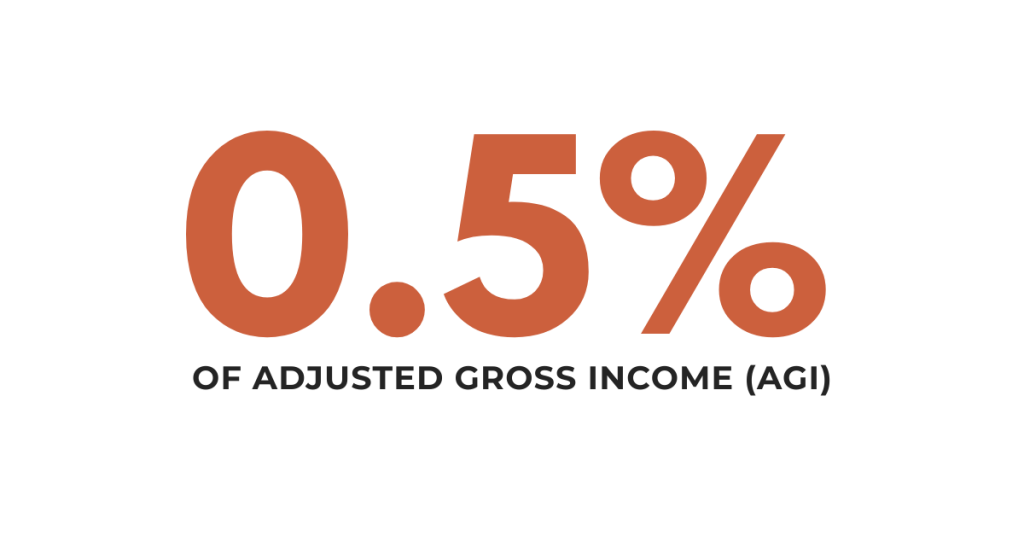
Beginning next year, only charitable gifts that exceed 0.5% of your adjusted gross income (AGI) will qualify for an itemized charitable deduction.
That means smaller or modest annual gifts may lose their deduction benefit for many taxpayers.
For those who wish to continue donating smaller amounts regularly, this significantly changes the calculus.
2025’s Elevated SALT deduction cap & Itemized Deduction Appeal
For 2025, the cap on state & local tax (SALT) deductions has been raised — which, combined with charitable giving and other deductions, may make itemizing more favorable for some donors this year.
This creates a temporary window where itemized deductions (including charitable gifts) may offer more tax benefit than usual.
After 2025 (once the cap resets), itemizing may be less advantageous depending on your tax profile.

Continued Favorability for Large or Strategic Gifts
Even after these shifts, certain giving approaches remain favorable:
Cash or asset gifts directed to qualified public charities remain deductible (subject to limits) in many cases.
Giving appreciated securities, real estate, or other non-cash assets can offer powerful tax-efficiency, especially for high-basis assets or concentrated positions.

Charitable Giving Strategies for 2025
1. “Bunching” or Pre-Funding Multiple Years of Giving
If you typically make small annual donations, you might consider consolidating several years’ worth into a single larger contribution this year (2025).
This can help maximize deductions under the current rules before the 2026 deduction floor kicks in.
2. Donating Appreciated Assets, Not Just Cash
If you hold investments that have gained significantly in value (stocks, mutual funds, real estate, business interests), gifting those directly to charity (or to a DAF) can be more tax-efficient than selling then donating.
- Avoids capital gains tax on appreciated value.
- Allows a deduction for the full fair market value of the asset (subject to IRS limits).
- Often increases the real amount given to charity (versus net after-tax donation) — good for both donor and cause.
This strategy tends to be especially effective for high-net-worth individuals, business owners, or anyone with concentrated positions or low-basis, long-held assets.
3. Use a Donor-Advised Fund (DAF) for Flexibility & Future Grantmaking
A DAF is often an useful vehicle if you want to:
- Make a charitable commitment now (with tax benefits), but keep flexibility around which charities to support later
- Contribute appreciated securities or non-cash assets (which many charities struggle to accept directly)
- Streamline record-keeping, simplify grant distributions, and potentially involve family members or future generations in philanthropic decisions
For HNW individuals and families, DAFs often represent the “sweet spot” between the simplicity of direct giving and the control and legacy potential of a private foundation.
4. Consider Charitable Trusts or a Private Foundation for Long-Term Impact
If your philanthropic goals are broad, long-term, or you want to involve multiple family members or beneficiaries, tools like Private Foundations or Charitable Trusts (lead trusts, remainder trusts) may offer structure and control.
Private foundations allow you to manage grant-making, involve family, and build multi-generational philanthropic legacies.
Charitable trusts can combine philanthropy with estate planning, income planning, or legacy distributions.

How This Fits Into A Larger Financial & Life Plan
For our clients, especially those with complex assets (real estate, business interests, concentrated stock, etc.), charitable giving doesn’t exist in a vacuum. When done strategically, it can:
- Reduce tax liability (income taxes, capital gains, estate taxes)
- Support long-term legacy planning (through DAFs, trusts, foundations)
- Allow flexibility to respond to emerging needs or causes over time
- Engage next-generation family members in shared values and philanthropic goals
- Align wealth, values, and social impact in a holistic financial plan
As your trusted fiduciary financial firm, we can help you:
- Evaluate which assets make sense to use for charitable gifts (cash, securities, real estate, business interests)
- Run “what-if” analyses for different giving strategies (lump sum vs annual, asset type, timing)
- Compare vehicles (DAF, foundation, trust) based on complexity, control, and legacy goals
- Coordinate charitable giving with your broader investment, tax, and estate plan
Where to Start: A Checklist for End-of-Year Giving
If you’re thinking about giving now or in the near future, here’s a quick checklist to explore:
-
Review your portfolio: identify appreciated securities, real estate, or other assets that might be good candidates for gifting.
-
Assess your intended charitable budget for the next 3–5 years. Could pre-funding or bunching make sense?
-
Consider if setting up a DAF fits into your strategy.
-
For larger, multi-generational giving goals – explore trust or foundation structures.
-
Coordinate with your tax advisor, estate attorney, or other professionals to integrate giving with your financial plan.
-
Document your philanthropic goals: causes you care about, impact timeline, long-term intentions.